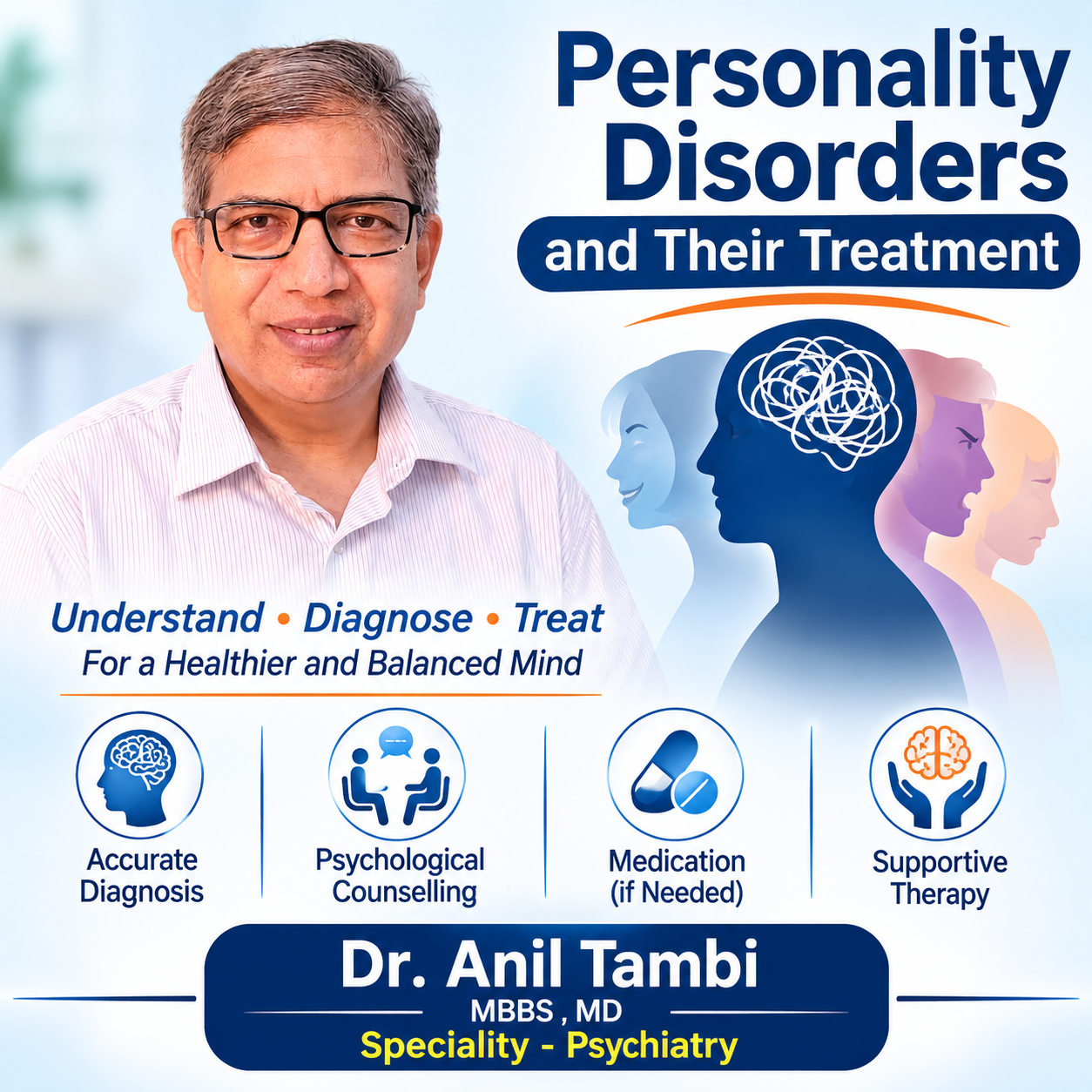
Understanding Personality Disorders and Their Treatment | Dr. Anil Tambi
Personality disorders are mental health conditions that affect how a person thinks, feels, behaves, and interacts with others. These patterns may influence relationships, emotional responses, decision-making, and everyday activities. People experiencing personality disorders may find it difficult to manage emotions, maintain relationships, or adapt to different social situations.
Understanding personality disorders is an important step towards identifying symptoms and seeking appropriate psychiatric support. With proper diagnosis, psychological therapies, and professional guidance, individuals can learn healthier ways to manage their thoughts, emotions, and behaviours.
What Are Personality Disorders?
Personality disorders are mental health conditions characterised by long-standing patterns of thinking, feeling, and behaving that differ significantly from cultural expectations. These patterns can affect personal relationships, professional life, and social interactions.
Symptoms often begin during adolescence or early adulthood and may continue over time. However, their severity and impact can vary from person to person. Early recognition and appropriate treatment can help individuals improve emotional well-being and daily functioning.
Types of Personality Disorders
Personality disorders are generally classified into three groups based on their characteristics.
1. Cluster A – Unusual or Eccentric Behaviour
- Paranoid Personality Disorder
- Schizoid Personality Disorder
- Schizotypal Personality Disorder
2. Cluster B – Dramatic or Emotional Behaviour
- Antisocial Personality Disorder
- Borderline Personality Disorder
- Histrionic Personality Disorder
- Narcissistic Personality Disorder
3. Cluster C – Anxious or Fearful Behaviour
- Avoidant Personality Disorder
- Dependent Personality Disorder
- Obsessive-Compulsive Personality Disorder
Each condition has different characteristics and may require an individualised treatment approach.
Common Symptoms of Personality Disorders
Symptoms depend on the type of personality disorder and the individual's circumstances. Some commonly observed signs include:
- Difficulty maintaining healthy personal relationships.
- Frequent emotional changes or intense emotional reactions.
- Persistent feelings of insecurity or fear of rejection.
- Difficulty managing anger and frustration.
- Unusual patterns of thinking or behaviour.
- Excessive need for attention or approval.
- Difficulty trusting other people.
- Social withdrawal and avoidance of interactions.
- Challenges in adapting to everyday situations.
Experiencing one or more of these symptoms does not automatically indicate a personality disorder. A qualified mental health professional can assess persistent patterns and determine whether further evaluation is needed.
Causes and Risk Factors
There is no single cause of personality disorders. Research suggests that a combination of biological, psychological, and environmental factors may contribute to their development.
Some potential risk factors include:
- Genetic Factors: Family history and inherited characteristics may contribute to susceptibility.
- Childhood Experiences: Childhood trauma, neglect, or emotional difficulties may influence personality development.
- Environmental Factors: Family relationships, social surroundings, and stressful life experiences can play a role.
- Brain and Biological Factors: Differences in brain development, functioning, and emotional regulation may contribute to certain conditions.
- Psychological Factors: Long-term difficulties with emotional regulation, self-image, and interpersonal relationships may be associated with personality disorders.
Diagnosis of Personality Disorders
Diagnosing personality disorders requires a detailed psychiatric evaluation. A mental health professional assesses the individual's behaviour, emotional patterns, personal history, and relationships.
The diagnostic process may include:
- Reviewing personal, family, and medical history.
- Discussing emotional difficulties and behavioural patterns.
- Evaluating the duration and severity of symptoms.
- Assessing the impact on relationships and daily activities.
- Identifying other mental health conditions that may cause similar symptoms.
An accurate diagnosis helps determine the most appropriate treatment plan.
Personality Disorder Treatment Options
Treatment focuses on improving emotional regulation, managing behavioural difficulties, and developing healthier interpersonal relationships. The treatment approach depends on the specific condition, symptoms, and individual needs.
1. Psychotherapy
Psychotherapy is an important treatment approach for personality disorders. It helps individuals understand their thoughts, emotions, and behavioural patterns while developing healthier coping strategies.
2. Cognitive Behavioural Therapy (CBT)
CBT helps individuals identify unhelpful thinking patterns and replace them with more balanced and constructive responses. It may support better emotional management and decision-making.
3. Dialectical Behaviour Therapy (DBT)
DBT is particularly useful for certain individuals with borderline personality disorder. It focuses on emotional regulation, distress tolerance, mindfulness, and interpersonal effectiveness.
4. Medication Management
There is no specific medication that cures personality disorders. However, a psychiatrist may prescribe medicines to manage associated symptoms such as anxiety, depression, mood difficulties, or sleep disturbances when clinically appropriate.
5. Family Support and Counselling
Family education and counselling can help relatives understand the condition, improve communication, and provide appropriate emotional support.
When Should You Consult a Psychiatrist?
Professional psychiatric consultation may be helpful when persistent behavioural or emotional difficulties begin affecting relationships, work, education, or daily life.
Consider seeking an evaluation if you or someone close to you experiences ongoing emotional instability, difficulty maintaining relationships, repeated conflicts, or significant changes in behaviour.
Early assessment can help identify the underlying concerns and guide appropriate care.
Personality Disorder Treatment in Jaipur – Dr. Anil Tambi
Dr. Anil Tambi provides psychiatric consultation and mental health care in Jaipur. Individuals experiencing persistent emotional difficulties, behavioural changes, or relationship challenges can seek professional evaluation to understand their symptoms and explore suitable treatment options.
Psychiatric assessment helps identify individual concerns and supports the development of an appropriate care plan based on clinical needs. Treatment may involve psychotherapy, medication management when required, and ongoing professional guidance.
If you are looking for information about personality disorder diagnosis and treatment in Jaipur, consulting a qualified psychiatrist can be an important step towards better mental health and emotional well-being.
Frequently Asked Questions :
1. What is a personality disorder?
A personality disorder is a mental health condition involving long-term patterns of thinking, feeling, and behaving that can affect relationships and everyday functioning.
2. What are the common symptoms of personality disorders?
Common symptoms may include emotional instability, relationship difficulties, fear of rejection, unusual behavioural patterns, and challenges with emotional regulation.
3. Can personality disorders be treated?
Yes. Personality disorders can be managed with appropriate psychological therapies, psychiatric support, and medication for associated symptoms when necessary.
4. Which therapy is used for personality disorders?
Treatment may include Cognitive Behavioural Therapy (CBT), Dialectical Behaviour Therapy (DBT), and other structured psychotherapeutic approaches depending on the individual's condition.
5. When should I consult a psychiatrist for personality disorders?
You should consider consulting a psychiatrist when persistent emotional or behavioural difficulties interfere with relationships, professional responsibilities, or everyday activities.
6. Can people with personality disorders lead normal lives?
Yes. With appropriate treatment, continued support, and effective coping strategies, many individuals can improve their relationships, emotional well-being, and daily functioning.
Keywords